Thursday, 13 July 2017

Sean Seshadri - Oil prices slump as U.S. crude output rises

Oil prices were lower in European trade on Thursday, as concern over rising production in the U.S. and elsewhere dampened sentiment.
The U.S. West Texas Intermediate crude August contract was at $45.30 a barrel by 3:45AM ET (0745GMT), down 18 cents, or around 0.4%.
Elsewhere, Brent oil for September delivery on the ICE Futures Exchange in London slipped 19 cents to $47.55 a barrel.
Oil ended higher on Wednesday after U.S. government data confirmed a sharp decline in domestic crude supplies for a second week in a row. Prices, however, ended off the best levels of the session, as rising production in the U.S. underlined concern over a supply glut.
© Reuters.  Oil prices slump
Data from the U.S. Energy Information Administration showed that crude oil inventories fell by 7.6 million barrels in the week ended July 7. There was additional support stemming from a decline in U.S. gasoline inventories.
But total domestic crude production edged up by 59,000 barrels a day to 9.397 million barrels a day last week, according to the EIA figures.
Oil prices have been under pressure in recent weeks as concern over rising U.S. shale output canceled out production cuts by OPEC and non-OPEC members.
In May, OPEC and some non-OPEC producers extended a deal to cut 1.8 million barrels per day in supply until March 2018.
However, data showed that the cartel's oil production actually rose in June, edging up by 393,000 barrels a day to 32.61 million, led by increases in Libya and Nigeria.
Elsewhere on Nymex, gasoline futures for August shed 0.9 cents to $1.507 a gallon, while August heating oil dipped 0.6 cents to $1.467 a gallon.
Natural gas futures for August delivery tacked on 2.5 cents to $3.010 per million British thermal units, as traders looked ahead to weekly storage data due later in the global day.

Wednesday, 12 July 2017

Sean Seshadri - Oil prices jump on falling U.S. fuel inventories, lower production outlook

Oil prices rose more than 1 percent on Wednesday, extending gains from the previous day as the U.S. government cut its crude production outlook for next year and as fuel inventories plunged.
Brent crude futures were up 60 cents, or 1.3 percent, at $48.12 per barrel by 0657 GMT, while U.S. West Texas Intermediate (WTI) crude futures were at $45.72 per barrel, up 68 cents, or 1.5 percent.
Both settled about 1.4 percent higher on Tuesday.
"The oil price ... climbed sharply overnight as the Energy Information Agency cut its forecast for U.S. production in 2018 and API data showed another large inventory drawdown," said William O'Loughlin, investment analyst at Australia's Rivkin Securities.
© Reuters. FILE PHOTO: An employee pumps petrol into a car at a petrol station in Hanoi
U.S. crude oil inventories fell by 8.1 million barrels in the week to July 7 to 495.6 million, according to the American Petroleum Institute (API), in an indictor that a long-standing fuel supply overhang is starting to draw down.
"Brent and WTI spot staged an impressive ... rally ... as the American Petroleum Institute reported a massive 8.1 million barrel drawdown in inventories," said Jeffrey Halley, senior market analyst futures brokerage OANDA in Singapore.
"All eyes will now turn to the official U.S. crude inventories number this evening," he added.
The weekly petroleum status report by the U.S. Energy Information Administration (EIA) is scheduled to be released after 1030 Eastern Time (1430 GMT) on Wednesday.
Also adding to the upward price pressure, the EIA said late on Tuesday that it expected 2018 crude oil output to rise to 9.9 million barrels per day (bpd) from 9.3 million bpd this year, a 570,000 bpd increase. This was down from last month's forecast 680,000 bpd year-over-year increase.
Despite the slight downward revision, U.S. production is still set to break the 9.61 million bpd record from June 2015.
At the same time, output from the Organization of the Petroleum Exporting Countries (OPEC) remains high despite a pledge led by the producer group to cut supplies between January of this year and March 2018 in order to tighten the market and prop up prices.

Tuesday, 11 July 2017

Sean Seshadri - China sets sights on oil benchmark after years of delays

China has opened more than 6,000 trading accounts for its long-awaited crude futures contract - with three-quarters coming from individual traders - as it pushes ahead with plans to compete with global pricing benchmarks.
China's oil majors and about 150 brokerages have also registered, but the strong interest by 'mom-and-pop' investors looks set to mark out China's crude futures from western counterparts, which are dominated by institutional investors.
Shanghai International Energy Exchange (INE), which will run China's contract, says it is finalizing technical issues. The contract has faced years of delays and there is still no set date, but INE and also trading participants now say a launch this year is almost certain.
"The INE is striving to launch the crude oil futures within this year," a spokeswoman said, adding that the exchange has conducted four trials to ensure it is technically ready.
© Reuters.  China sets sights on oil benchmark after years of delays
Oil futures trading volume is small during Asian hours despite the region's role as the world's top consumer.
Shanghai's crude futures are aimed at giving China more clout in pricing crude in Asia and a share of the trillions of dollars in oil futures trade.
The INE hopes to attract foreign investors, and locally registered entities of JPMorgan (NYSE:JPM) and UBS are among those registered, although international players have raised concerns, including denomination in yuan, that may dampen early take-up.
Most oil trades are priced off two crude derivatives, U.S. West Texas Intermediate (WTI) and London's Brent, traded on the Intercontinental Exchange and the New York Mercantile Exchange (NYMEX) owned by CME Group (NASDAQ:CME).
Earlier attempts to establish an Asian derivative crude contract by Singapore and Tokyo foundered. The only liquid crude futures in the region is the Oman contract on the Dubai Mercantile Exchange.
RETAIL INTEREST
Successful crude derivatives would be the jewel in the crown in China's push to ramp up futures trading on products from dates to steel to open up markets and offer new avenues for investors.
While Chinese banks are barred from futures trading, the new market is expected to attract interest from deep-pocketed private equity firms and funds, while state-owned oil majors, like PetroChina and Sinopec will provide liquidity.
PetroChina is set to register two accounts and Sinopec is setting up a trading outfit in Shanghai dedicated to the contract, said senior company sources.
Independent refiners like Shandong Chambroad Group have also joined, while retail interest is strong.
Individuals already account for 80 percent of turnover on China's $8 trillion equity markets, and day traders have whipsawed commodities from eggs to iron ore in China over the past year.
Jin Changyi, a 40-year-old former hotel owner from eastern China, who began dabbling in Brent crude oil futures last year, has opened a 500,000-yuan ($75,000) account with a Shanghai-based brokerage and plans to act as a mini-broker for friends.
"The way it's designed it won't fluctuate wildly. Compared to trading Brent, the risks are more manageable," he told Reuters.
INTERNATIONAL CONCERNS
International interest at first may be more muted.
Executives at international banks and traders who have reviewed the contract rules and specifications warn of concerns including Beijing's clamp-down on capital outflows, unusually small price limits and China's heavy handed intervention in commodity markets last year.
"Everybody is staring at everybody else," said an official with a western investment bank who declined to be named due to company policy.
Reflecting a regulatory aim to stave off price volatility, the Shanghai contract has a 4 percent daily price fluctuation limit, half the limit for Chinese coking coal.
China's crude futures also do not have a mechanism to reset limits after a big price move, which means Shanghai trading could freeze while prices still move elsewhere. For WTI, for example, a $10 a barrel move activates circuit breakers to pause trade briefly until a new limit of another $10 is set.
Industry players also worry about delays in issuing rules over storage and grades for deliveries.
The INE has yet to finalize details of warehouse tanks, including locations, rules over fuel blending and price differentials between grades, all key for helping industry participants decide on whether or not to take deliveries.
The INE spokeswoman said it is working on approved crude oil delivery points, which are located in the peninsulas of Liaodong and Shandong, Yangtze River Delta and Pearl River Delta.
Local traders hope the contract will take off.
"The contract will initially track Brent and WTI markets," said a derivatives trading manager with a Chinese state oil company, who declined to be named because he is not authorized to speak to media.
"It won't be an immediate success, but we're hopeful."
Monday, 3 July 2017

Saudi heavy crude price to Asia may hit highest in over three years - Sean Seshadri

World No.1 oil exporter Saudi Arabia could raise prices for the heavy crude it sells to Asia in August to the highest in more than three years, trade sources said.
The move would come after refiner profits on churning out fuel oil from heavy crude hit record highs, with state oil giant Saudi Aramco cutting heavy crude production as part of a drive led by the Organization of the Petroleum Exporting Countries (OPEC) to rein in global output.
Saudi Aramco may lift the official selling price (OSP) for Arab Heavy crude to Asia by 20 cents a barrel to $1.65 below the average of Oman and Dubai quotes in August, its narrowest discount since December 2013, according to four Asian crude buyers.
A fifth trade source surveyed by Reuters said the price for the grade would remain unchanged from this month.
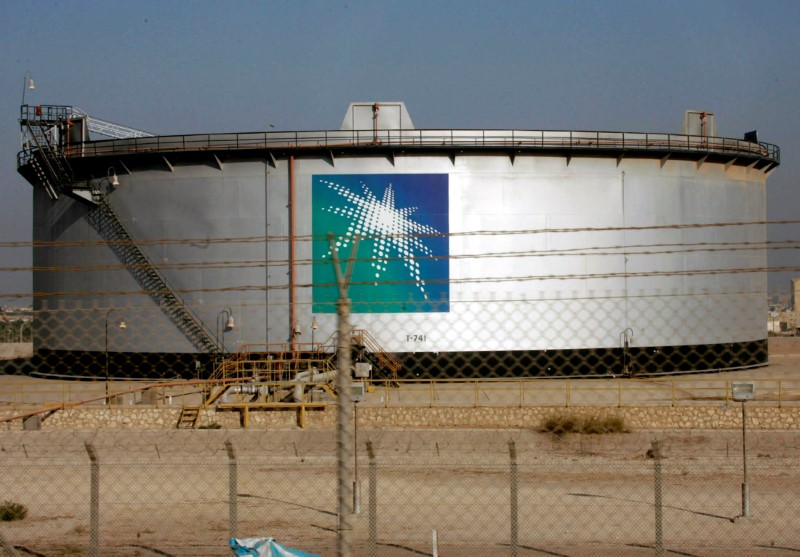
© Reuters. FILE PHOTO: An oil tank is seen at the Saudi Aramco headquarters during a media tour at Damam city
A hike in prices for Saudi heavy crude could buoy demand for such oil from other Middle Eastern producers, as well as supplies from Russia, Angola and the Americas.
"Maybe they (Saudi Aramco) will cut Arab Heavy supplies for August because of the OPEC cut and summer demand for power generation," said a trader with a North Asian refiner.
Tighter heavy crude supplies have reduced fuel oil output and helped push profits on making that product in Asia to an all-time high of a 59 cents premium against Dubai crude on June 22.
Meanwhile, the four sources who expected a climb in Saudi heavy crude prices predicted that flagship Arab Light's OSP would fall to a two-month low for August, down 20 cents a barrel after the Dubai market weakened last month.
Saudi crude OSPs are usually released around the fifth of each month, and set the trend for Iranian, Kuwaiti and Iraqi prices, affecting more than 12 million barrels per day (bpd) of crude bound for Asia.
Saudi Aramco sets its crude prices based on recommendations from customers and after calculating the change in the value of its oil over the past month, based on yields and product prices.
Saudi Aramco officials as a matter of policy do not comment on the kingdom's monthly OSPs.

Tuesday, 27 June 2017

Crude oil prices extend bounce off 10-month lows - Sean Seshadri

Oil prices were higher in European trade on Tuesday, extending their recovery from last week's ten-month lows, but futures stayed volatile in the face of fresh supply worries amid indications that U.S. shale production will continue to rise.
The U.S. West Texas Intermediate crude August contract was at $43.72 a barrel by 3:25AM ET (0725GMT), up 35 cents, or around 0.8%. It touched its lowest since August 11 at $42.05 on Wednesday last week.
Elsewhere, Brent oil for September delivery on the ICE Futures Exchange in London tacked on 39 cents to $46.43 a barrel, after hitting $44.35 last Wednesday, a level not seen since November 14.
© Reuters.  Crude oil prices extend bounce off 10-month lows
Oil settled higher Monday, tallying their third straight session of gains, despite ongoing pressure from expectations of further growth in U.S. output.
U.S. drillers last week added rigs for the 23rd week in a row, according to data from energy services company Baker Hughes, implying that further gains in domestic production are ahead.
The increase in U.S. drilling activity and shale production has mostly offset efforts by OPEC and other producers to cut output in a move to prop up the market.
In May, OPEC and some non-OPEC producers extended a deal to cut 1.8 million barrels per day in supply until March 2018.
Investors looked ahead to weekly data from the U.S. on stockpiles of crude and refined products.
Industry group the American Petroleum Institute is due to release its weekly report at 4:30PM ET (2030GMT) later on Tuesday. Official data from the Energy Information Administration will be released Wednesday, amid forecasts for an oil-stock drop of around 2.2 million barrels.
Elsewhere on Nymex, gasoline futures for August inched up 0.1 cents to $1.435 a gallon, while August heating oil gained 0.9 cents to $1.395 a gallon.
Natural gas futures for August delivery rallied 2.6 cents to $3.075 per million British thermal units.

Thursday, 22 June 2017

Oil edges up, but still set for worst first-half performance in 20 years - Sean Seshadri

Oil edged up on Friday, recovering some of the steep falls earlier in the week, but crude is still set for the worst first-half decline in two decades despite ongoing production cuts.
Brent crude futures (LCOc1) were at $45.39 per barrel at 0501 GMT, up 17 cents, or 0.4 percent, from their last close.
U.S. West Texas Intermediate (WTI) crude futures (CLc1) were up 17 cents, or 0.4 percent, at $42.91 per barrel.
Oil prices have fallen about 20 percent this year despite an effort led by the Organization of the Petroleum Exporting Countries (OPEC) to cut production by 1.8 million barrels per day (bpd) that has been in place since January.
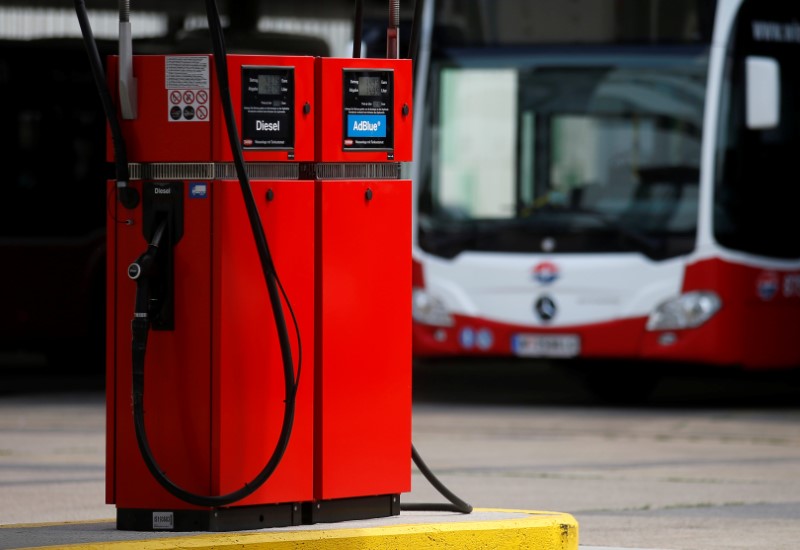
© Reuters. A diesel oil pump is seen at a bus terminal in Vienna
That's the worst first-half performance for crude oil since 1997, when rising output and the Asian financial crisis led to sharp price falls.
The weak markets are a result of doubts over OPEC's ability to rein in a fuel supply overhang that has dogged markets since 2014 as production has largely outpaced consumption.
"Markets remain skeptical of OPEC's ability to balance supplies," ANZ bank said on Friday.
At the heart of the glut is that recent efforts to reduce production from the traditional suppliers of OPEC and Russia has been met by soaring output from the United States.
Thanks largely to shale drillers, U.S. oil production has risen by more than 10 percent over the last year to 9.35 million bpd, close to the level of top exporter Saudi Arabia.
Excess production has left storage tanks around the world bloated.
"Inventories through April are up 80m (million barrels) since the beginning of the year, raising market concerns about the efficacy of OPEC market management," U.S. investment bank Jefferies said.
"We remain of the view that inventories will draw by 1.5 million bpd in the second half (of 2017), but empirical evidence of this is likely necessary for oil prices to inflect into an upward trend," it added.

Wednesday, 21 June 2017

Oil struggles near multi-month lows ahead of U.S. supply update - Sean Seshadri

Oil prices struggled near multi-month lows in European morning trade on Wednesday, as investors looked ahead to weekly data from the U.S. on stockpiles of crude and refined products later in the global day.
Markets had a muted reaction to news that Saudi Arabia has relieved Muhammad bin Nayef as crown prince, replacing him with Mohammad bin Salman.
The U.S. West Texas Intermediate crude August contract was at $43.49 a barrel by 3:10AM ET (0710GMT), down 2 cents. The U.S. benchmark fell to its lowest since November 14 at $42.94 in the prior session.
Elsewhere, Brent oil for August delivery on the ICE Futures Exchange in London dipped 7 cents to $45.95 a barrel, after hitting $45.42 a day earlier, a level not seen since November 15.
© Reuters.  Oil struggles near multi-month lows
Oil prices lost around 2% on Tuesday, falling into bear market territory, as concerns over a steady increase in U.S. production added to fears over a glut in the market.
The U.S. Energy Information Administration will release its official weekly oil supplies reportat 10:30AM ET (1430GMT) Wednesday.
Analysts expect crude oil inventories dropped by around 2.1 million barrels at the end of last week, while gasoline supplies are seen increasing by 443,000 barrels and distillates are forecast to gain about 465,000 barrels.
After markets closed Tuesday, the American Petroleum Institute said that U.S. oil inventories fell by 2.72 million barrels in the week ended June 16.
The API report also showed a gain of 346,000 barrels in gasoline stocks, while distillate stocks rose by 1.837 million barrels.
There are often sharp divergences between the API estimates and the official figures from EIA.
Oil prices have been under pressure in recent weeks as concern over rising U.S. shale output offset production cuts by OPEC and non-OPEC members.
U.S. drillers last week added rigs for the 22nd week in a row, extending a year-long drilling recovery to the highest level since April 2015, implying that further gains in domestic production are ahead.
The increase in U.S. drilling activity and shale production has mostly offset efforts by OPEC and other producers to cut output in a move to prop up the market.
Last month, OPEC and some non-OPEC producers extended a deal to cut 1.8 million barrels per day in supply until March 2018.
So far, the production-cut agreement has had little impact on global inventory levels due to rising supply from producers not participating in the accord, such as Libya and Nigeria.
Elsewhere on Nymex, gasoline futures for July inched up half a cent to $1.423 a gallon, while July heating oil added lost 0.4 cents to $1.394 a gallon.
Natural gas futures for July delivery ticked down 0.9 cents to $2.897 per million British thermal units.