Monday, 27 March 2017

Crude prices dip in Asia as market mulls supply outlook - Sean Seshadri

Crude prices gave up early gains in Asia on Monday after a weekend meeting that saw some promise for the extension of a coordinated output cut by OPEC and non-OPEC key producers.
At the weekend, a joint committee of ministers from OPEC and non-OPEC oil producers has agreed to review whether a global pact to limit supplies should be extended by six months. Oil sector analysts said the lack of an immediate extension could drag on crude prices.
U.S. West Texas Intermediate crude for May on the New York Mercantile Exchange eased 0.19% $47.88. Elsewhere, on the ICE Futures Exchange in London, Brent oil for May delivery fell 0.04% to $50.78 a barrel.
In the week ahead, market participants will eye fresh weekly information on U.S. stockpiles of crude and refined products on Tuesday and Wednesday to gauge the strength of demand in the world’s largest oil consumer.
Last weeek, oil futures settled higher on Friday, but posted a weekly loss of around 2% as the market weighed rising shale production and record-high stockpiles in the U.S. against efforts by major producers to cut output to reduce a global glut.
Data from oilfield services provider Baker Hughes on Friday revealed that the number of active U.S. rigs drilling for oil rose by 21 last week, the tenth weekly increase in a row. That brought the total count to 652, the most since September 2015.
Meanwhile, the U.S. Energy Information Administration said on Wednesday that crude oil inventories rose by 5.0 million barrels last week to an all-time high of 533.1 million, feeding concerns about a global glut.
Oil has fallen sharply this month amid concern that the ongoing rebound in U.S. shale production could derail efforts by other major producers to rebalance global oil supply and demand.
OPEC agreed in November last year to curb its output by about 1.2 million barrels per day between January and June. Russia and 10 other non-OPEC producers have agreed to jointly cut by an additional 600,000 barrels per day.
In total, they agreed to reduce output by 1.8 million barrels per day to 32.5 million for the first six months of the year, but so far the move has had little impact on inventory levels.
OPEC's latest monthly report showed global oil stocks in January rose to 278 million barrels above the five-year average.

Friday, 24 March 2017

Gold prices slip lower as U.S. dollar rebounds - Sean Seshadri

Gold prices slipped lower on Friday, as the U.S. dollar regained some strength ahead of a highly-anticipated vote on U.S. President Donald Trump’s healthcare bill.
On the Comex division of the New York Mercantile Exchange, gold futures for April delivery were down 0.28% at $1,243.85, just off the previous session’s three-week high of $1.253,15.
The April contract ended Thursday’s session 0.20% lower at $1,247.20 an ounce.
Futures were likely to find support at $1,226.40, the low of March 23 and resistance at $1,253,15, Thursday’s high.
The dollar regained some strength as the vote on the U.S. administration’s healthcare bill was postponed on Thursday and rescheduled for Friday.
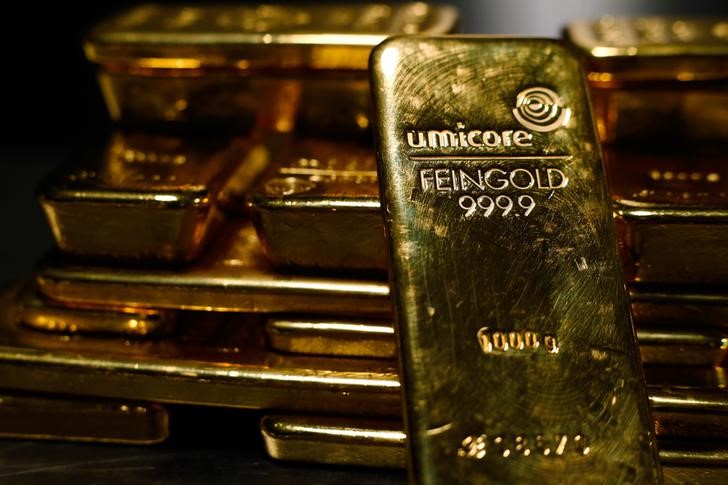
© Reuters.  Gold moves lower as U.S. dollar mildly recovers
Trump warned House Republican lawmakers that he will leave Obamacare in place and move on to tax reform if they do not approve new legislation on Friday.
The healthcare vote is seen by investors as a test of his ability to implement key campaign promises such as tax reform and infrastructure spending.
The U.S. dollar index, which measures the greenback’s strength against a trade-weighted basket of six major currencies, was up 0.15% at 99.71, pulling away from Wednesday’s six-week low of 99.34.
A strong U.S. dollar usually weighs on gold, as it dampens the metal's appeal as an alternative asset and makes dollar-priced commodities more expensive for holders of other currencies.
Market participants were looking ahead to a string of manufacturing and service sector activity data from the euro zone, due later in the day as well as U.S. data on durable goods orders.
Elsewhere in metals trading, silver futures for May delivery were little changed at $17.589 a troy ounce, while copper futures for May delivery fell 0.25% to $2.638 a pound.

Thursday, 23 March 2017

Crude holds gains in Asia as market looks to U.S. rig count data - Sean Seshadri

Crude prices held gains in Asia on Thursday as markets shrugged off downbeat supply data so far this week from the U.S. and looked ahead to more data on the supply response.
On the New York Mercantile Exchange crude futures for April delivery rose 0.73% to $48.38 a barrel, while on London's Intercontinental Exchange, Brent gained 0.69% to $50.99 a barrel.
Market attention now turns to the weekly rig count report on Friday from oilfield services firm Baker Hughes. Last week, the report showed the U.S. oil rig count rose by 14 to 631, the ninth straight weekly increase.
© Reuters.  Crude holds gains in Asia
Overnight, crude futures settled lower on Wednesday, after the latest Energy Information Administration (EIA) report showed a faster rise than expected in U.S. crude inventories.
For the week ended March 15, The EIA said that crude oil inventories rose by 5 million barrels to a record 533.1 million barrels compared to estimates of an increase of only 2.8 million barrels.
Gasoline inventories dipped by 2.811 million against expectations for a draw of 2.008 million barrels while distillate stockpiles fell by 1.910 million barrels, compared to expectations of a 1.386 million decline.
Crude futures have turned bearish this week as fears that a ramp up in U.S. crude and shale oil production may dampened OPEC’s efforts to rebalance supply and demand in the industry.
In November last year, OPEC and other producers, including Russia agreed to cut output by about 1.8 million barrels per day (bpd) in an effort to combat the oversupply issue that has pressured prices over the last two years.

Wednesday, 22 March 2017

Oil prices slide on bulging U.S. crude inventories - Sean Seshadri

Oil prices slipped back to three-month lows on Wednesday after data showed U.S. crude inventories rising faster than expected, piling pressure on OPEC to extend output cuts beyond June.
A deal between the Organization of the Petroleum Exporting Countries and some non-OPEC producers to reduce output by 1.8 million barrels per day (bpd) in the first half of 2017 has had little impact on bulging global stockpiles of oil.
Benchmark Brent crude was down 82 cents at $50.14 per barrel at 0936 GMT (5:36 a.m. ET), after dropping to $50.05, its lowest level since OPEC announced on Nov. 30 its plan for cuts. The deal with non-OPEC states was reached in December.
U.S. light crude was down 70 cents at $47.54 a barrel, also slipping toward a three-month low.
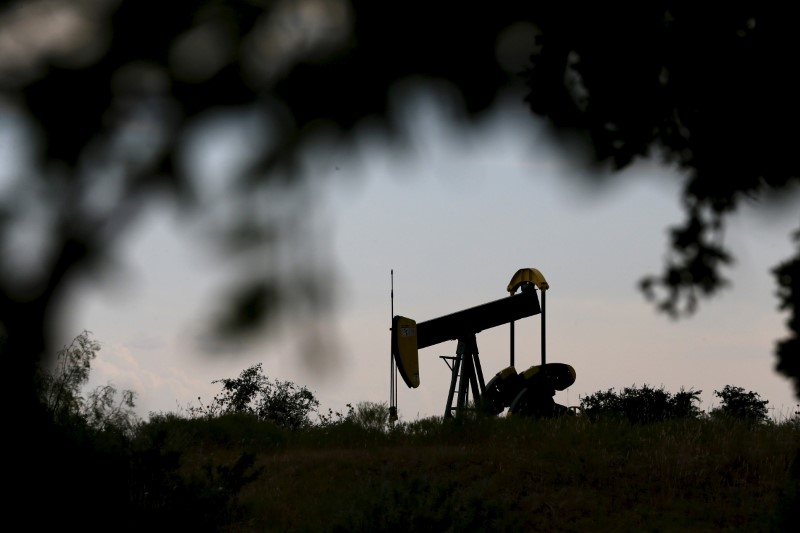
© Reuters. An oil pump jack can be seen in Cisco, Texas
"The lower the price goes, the higher the pressure on OPEC to extend cuts," Commerzbank (DE:CBKG) analyst Carsten Fritsch said.
Sources have said OPEC is inclined to extend but wants backing from non-OPEC producers, including Russia, even though such countries have yet to deliver fully on existing cuts.
On Tuesday, the American Petroleum Institute reported U.S. inventories climbed by 4.5 million barrels to 533.6 million last week, a bigger rise than the 2.8 million analysts forecast.
Investors now want to see whether Wednesday's figures from the Energy Information Administration, a unit of the Department of Energy (DoE), confirm the rise.
"A look below $50 (for Brent) is quite possible today if DoE data show a similar pattern, but it's impossible to say how far below $50," Commerzbank's Fritsch said.
U.S. shale oil producers have been adding rigs, pushing up the country's oil production to about 9.1 million bpd, from around 8.5 million bpd in late 2016.
"OPEC's market intervention has not yet resulted in significant visible inventory drawdowns, and the financial markets have lost patience," U.S. bank Jefferies said in a note.
The bank said OPEC-led cuts would start having an impact in the second half of 2017, but added that U.S. crude production was expected to grow by 360,000 bpd in 2017 and 1 million bpd in 2018.
U.S. bank Goldman Sachs (NYSE:GS) warned its clients in a note this week that a U.S. shale-led production surge "could create a material oversupply in 2018-19".

Tuesday, 21 March 2017

U.S. natural gas extends gains to reach 5-week highs - Sean Seshadri

U.S. natural gas futures extended gains to a third session on Tuesday, hitting the strongest level since February as forecasts showing cooler weather on the way continued to boost the heating fuel.
U.S. natural gas for April delivery rallied 5.0 cents, or around 1.6% to $3.092 per million British thermal units by 8:55AM ET (12:55GMT).
It reached a daily peak of $3.099 earlier, a level not seen since February 10, after jumping almost 10 cents, or more than 3%, on Monday.
Cool temperatures will sweep across the Great Lakes and eastern U.S. toward the middle of the week, according to forecasters at NatGasWeather.com, with overnight lows expected to drop well below freezing.
U.S. natural gas rallies to 5-week highs
Temperatures are expected to remain much colder than normal through the end of the week, with highs struggling to reach the 30s, while overnight lows drop into the teens to below 0F.
A fast-moving weather system will then impact the east-central U.S. Saturday into Sunday, followed by warming Monday, but again cooling off mid-week.
Meanwhile, market participants looked ahead to weekly storage data due on Thursday, which is expected to show a draw in a range between 150 and 160 billion cubic feet in the week ended March 17.
That compares with a withdrawal of 53 billion cubic feet in the preceding week, a build of 15 billion a year earlier and a five-year average drop of 21 billion cubic feet.
Total natural gas in storage currently stands at 2.295 trillion cubic feet, according to the U.S. Energy Information Administration, 7.7% lower than levels at this time a year ago but 15.8% above the five-year average for this time of year.
Prices of the heating fuel are down around 16% so far this year as forecasts for warm winter weather weighed on heating demand expectations.
Based on data from the National Oceanographic and Atmospheric Administration, this year’s extremely warm winter has pushed heating demand for natural gas to nearly 20% below average.
About half of U.S. homes use natural gas for heating.
Without significant demand for natural gas, inventories could stay near record levels and may even continue to pull prices even lower.

Monday, 20 March 2017

Oil cut extension may depend on non-OPEC compliance levels - Sean Seshadi

There has been talk of a possible extension of the six-month time frame of the OPEC-brokered output cut agreement among major oil producers.
OPEC agreed production cuts of 1.2 million barrels a day at the end of November, the first such accord in eight years.
Non-OPEC producers, led by Russia, also agreed to contribute cuts.


But oil prices have fallen from the highs hit after the agreement was announced, with U.S. crude struggling to hold onto $49 a barrel, levels last seen shortly after the deal was reached.
The International Energy Agency last week reported OPEC compliance with the cuts in the first two months of the year at 98%.
Non-OPEC compliance was estimated at only 37%.
Analysts are questioning whether top OPEC producer Saudi Arabia will agree to an extension if fellow producers are not delivering promised output cuts.
The IEA has estimated Saudi Arabia's compliance with cuts at 135%.
Saudi Arabia raised a few eyebrows in telling OPEC last week it had increased its output slightly in February from January.
Some observers interpreted the hike as a warning shot to other producers to comply with their obligations.

Friday, 17 March 2017

Gold prices edge lower but remain supported - Sean Seshadri

Gold prices edged lower on Friday, but still remained close to two-week highs thanks to a weaker U.S. dollar and the Federal Reserve’s dovish stance at its latest policy meeting.
On the Comex division of the New York Mercantile Exchange, gold futures for April delivery were down 0.09% at $1,226.05, just off the previous session’s two-week high of $1.231,40.
The April contract ended Thursday’s session 2.20% higher at $1,227.10 an ounce.
Futures were likely to find support at $1,197.70, the low of March 15 and resistance at $1,231.40, Thursday’s high.
© Reuters.  Gold prices pull slightly back but hover near 2-week highs
The greenback weakened broadly as the Fed’s policy statement was seen as less hawkish than expected by sticking to projections of three total rate hikes in 2017 and not four as some traders had hoped for.
As expected, the Fed increased interest rates by 25 basis points to 1.00% from 0.75%.
The U.S. dollar index, which measures the greenback’s strength against a trade-weighted basket of six major currencies, was steady at 100.07, the lowest since February 9.
A weak U.S. dollar usually supports gold, as it boosts the metal's appeal as an alternative asset and makes dollar-priced commodities cheaper for holders of other currencies.
Market participants were looking ahead to reports on U.S. industrial production and consumer sentiment due later in the day.
Elsewhere in metals trading, silver futures for May delivery slid 0.31% to $17.282 a troy ounce, while copper futures for May delivery dropped 0.58% to $2.662 a pound.